




With the 2026 Local Government Elections (LGE) just around the corner, voters are tasked with familiarising themselves with ballot papers, party manifestos, ward councillor candidates, local-level coalition politics and more. To many, especially young and first-time voters, this can seem like a daunting undertaking. Between billboards, posters, campaign initiatives and social media content – which ranges from well-intentioned infographic carousels to flagrant disinformation – it can be difficult to know where to start, or how to check political promises against a party or returning candidate’s real-world track record.
In an effort to help you make informed, confident choices in the voting booth on 4 November, OpenUp has compiled a list of free online tools that make LGE-related information easy to understand and share. Several of these projects have been developed by the OpenUp team in collaboration with other organisations and institutions, including the South African National Editors' Forum (SANEF), the South African National Treasury and the Mapungubwe Institute for Strategic Reflection (MISTRA). Others come from organisations such as the Electoral Commission of South Africa (IEC), Civics Academy and Moxii Africa – we hope you find them useful.
Start with the basics
Before doing anything else, it is important to familiarise yourself with the essentials. To gain some more insight into the local electoral system, what each ballot represents and proportional representation (PR), check out this short video by Civics Academy.
The IEC website also houses a variety of crucial resources. You can:
- check your voter registration status;
- find a list of candidates in your municipality or ward;
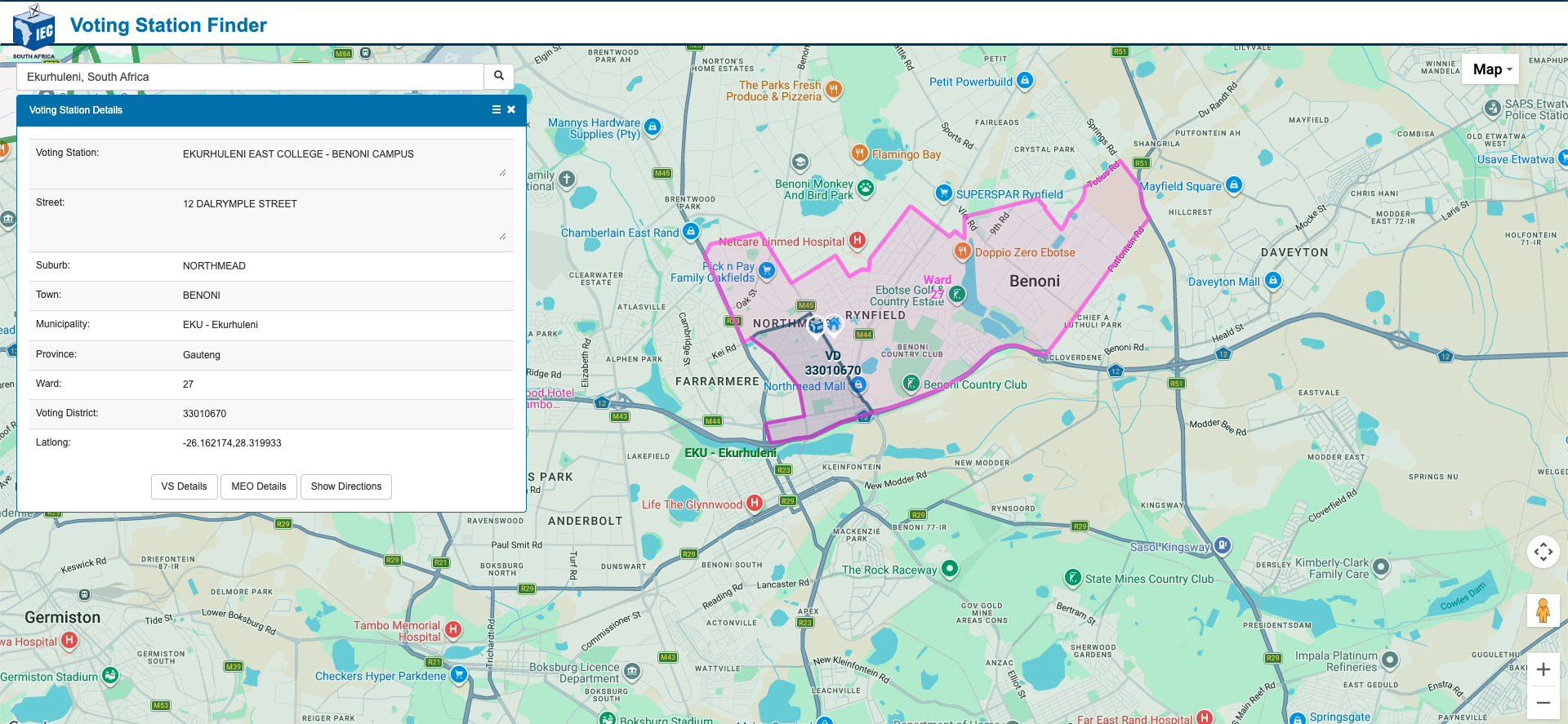
- and locate your assigned voting stations on a map.
The candidate list will help you decide which manifestos to read and the other two make sure you arrive at the correct venue come voting day.
Coalitions in context
The 2024 general election was a turning point in South African history. The African National Congress (ANC) lost their outright parliamentary majority for the first time since 1994, leading to the establishment of a coalition under the Government of National Unity (GNU). On a local level, coalition politics have been the norm for many years, as hung councils and multi-party governance have become commonplace in many municipalities, particularly in major metropolitan areas. Therefore, it is important that a party or candidate is able to collaborate across party lines to ensure stable local coalitions.
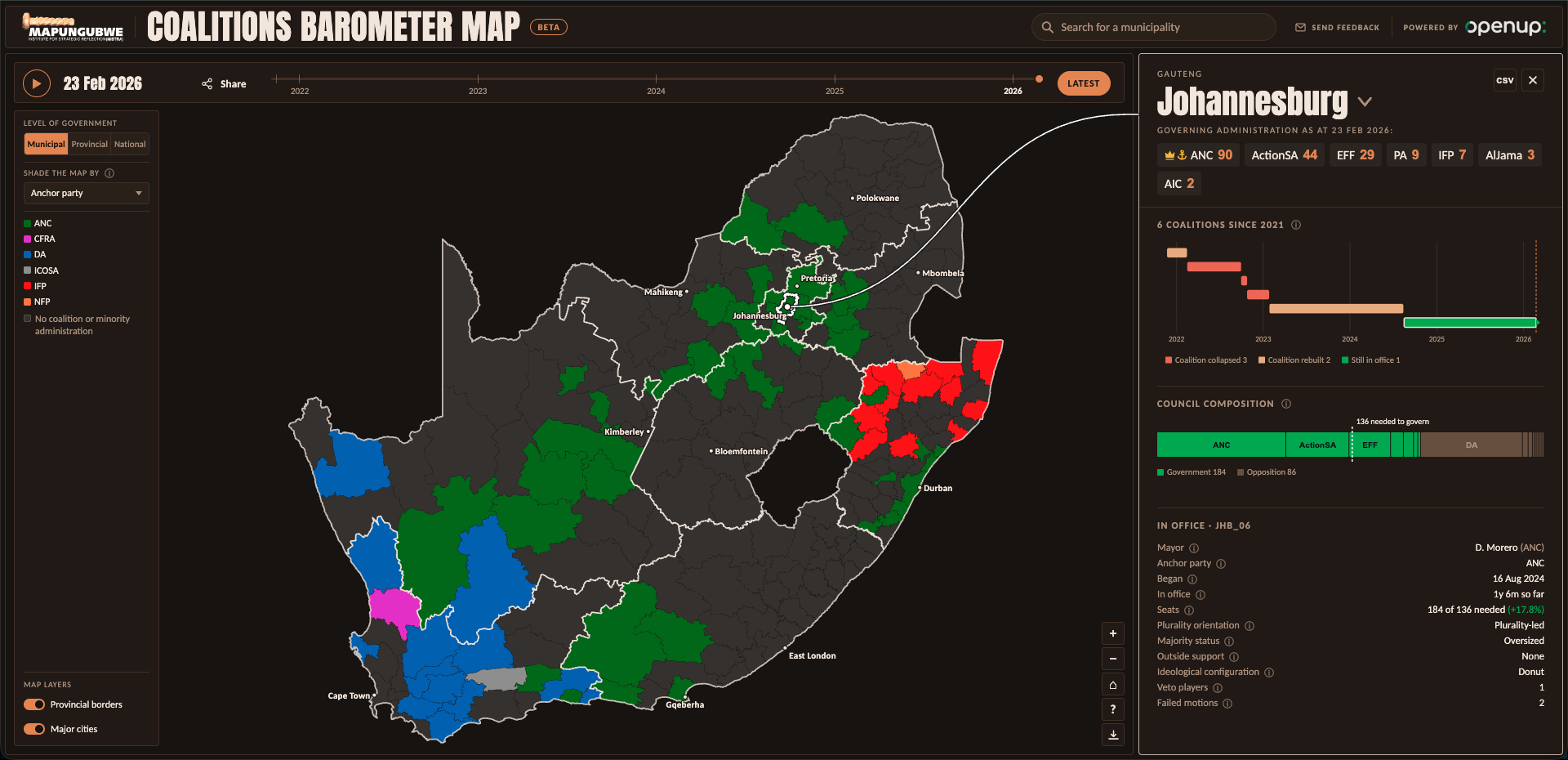
The MISTRA Coalitions Barometer dashboard, developed in collaboration with OpenUp, allows you to easily check who governs your municipality, including the mayor’s party, the party with the most seats and how the council’s seats are split. The dashboard’s right-hand panel also visualises the selected municipality’s coalition history, marking collapsed and rebuilt coalitions.
Follow the money
In a local election, basic service delivery issues like waste management or road and infrastructure maintenance are often front of mind for voters. Municipal budget allocation can be a useful indicator of what is truly being prioritised in your area.
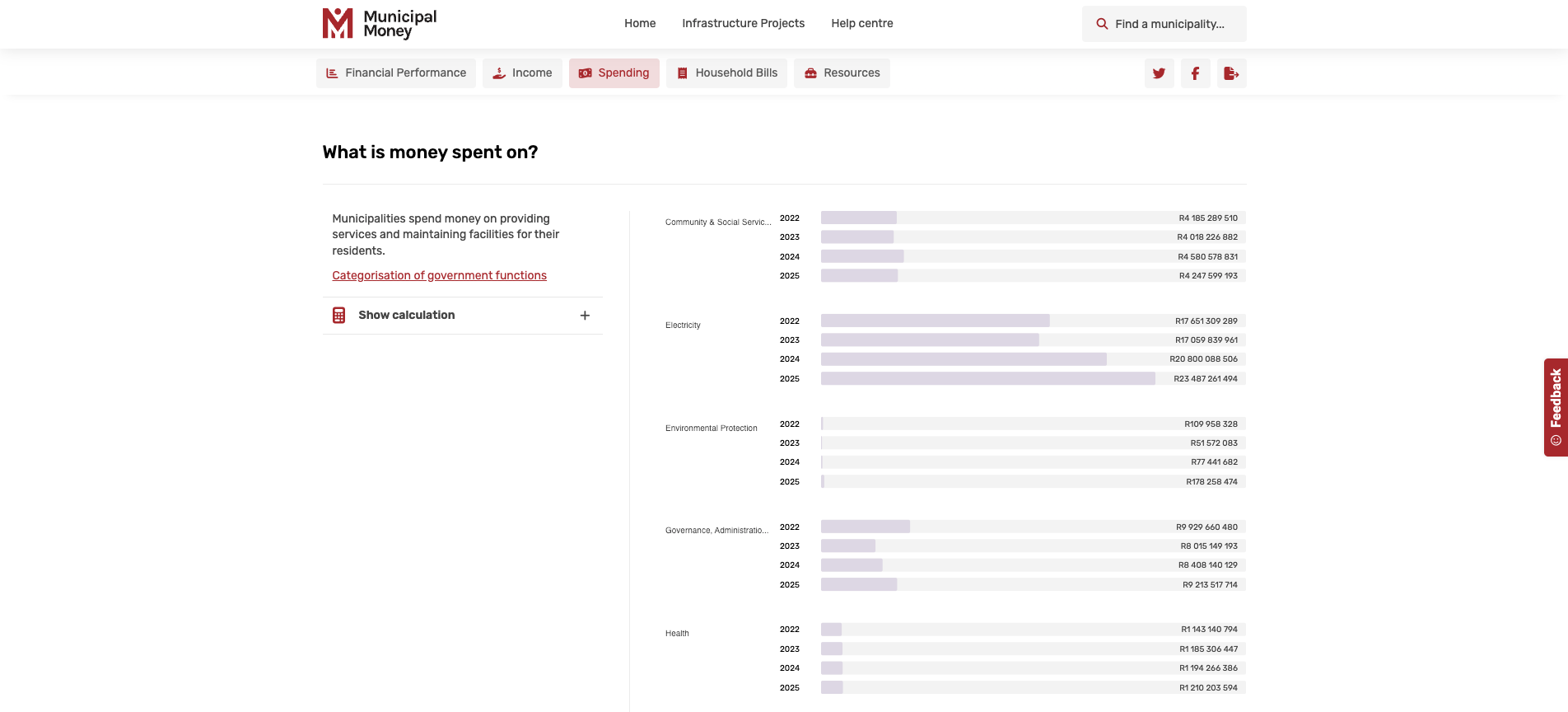
The Municipal Money dashboard, a project managed by the South African National Treasury and OpenUp, provides an overview of recent budget management by municipality, including audit outcomes, wasteful expenditure and spend by category. Alongside what you see in your own street, knowing how public money is spent is crucial in gauging whether your current local government is actually meeting your needs.
Elections past and present
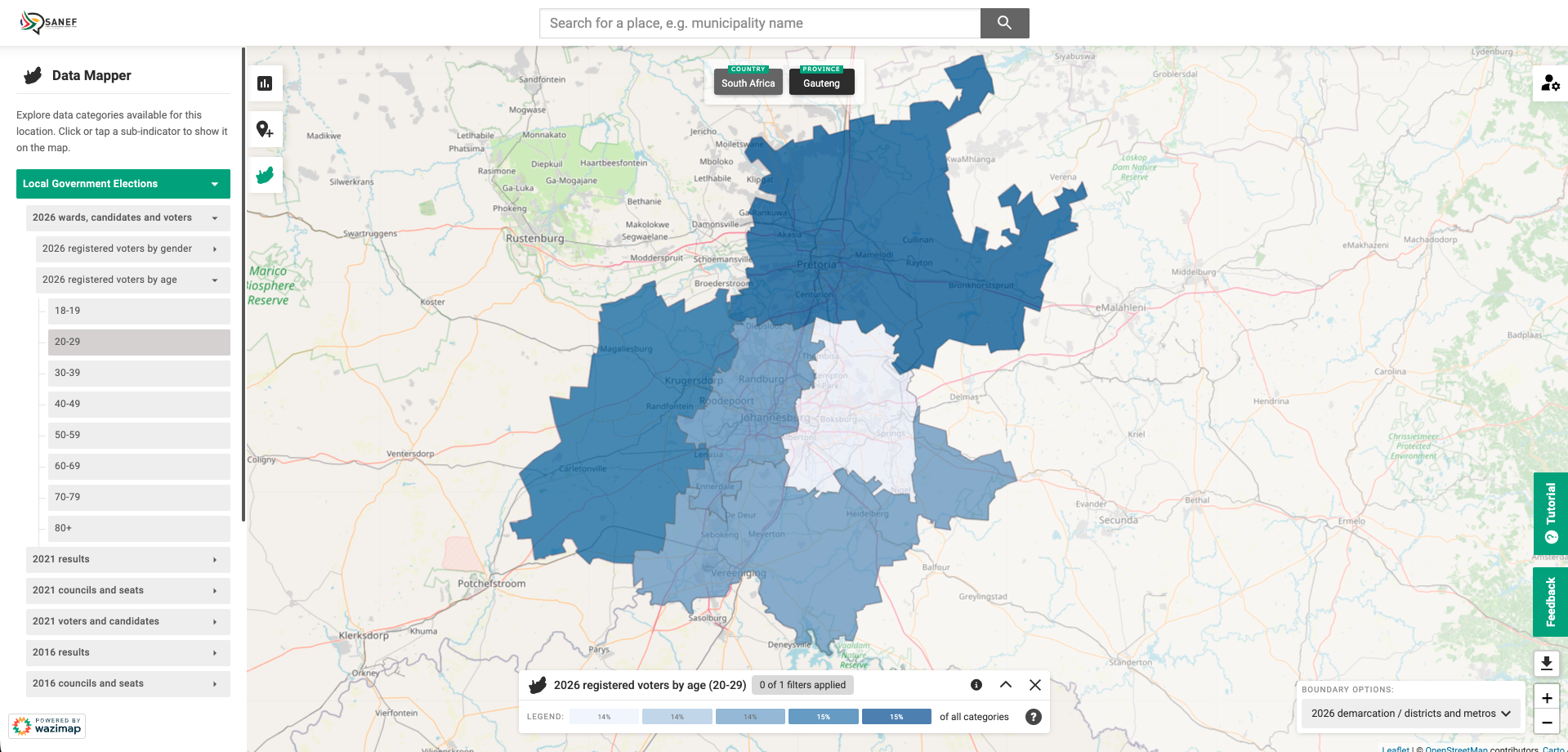
For voters, journalists and researchers alike, it is essential to be able to place current voter statistics and party campaigns in the broader context of past election trends and outcomes. The SANEF Elections Portal places freely available electoral and census data in an interactive map that SANEF and OpenUp have kept up to date through local, national and provincial elections. The dashboard covers data pertaining to voters, candidates, councils, seats and results from the 2016 and 2021 LGEs, and already shows wards, candidates and registered voters for 2026.
As the team prepares to update the map with the 2026 election results, we have taken note of some key data points to keep in mind going into the 2026 LGE:
If you are a returning voter, you may see that your ward has changed. Before every local election, the Municipal Demarcation Board redraws the wards. This time, almost every ward has new borders, a new number or both, though many changes are small. Of 4,485 wards across the country, only 65 are unchanged from 2021, and about one in seven was redrawn completely. You can view up-to-date ward demarcations on the SANEF Elections Portal, or find your voting station with the IEC Voting Station Finder mentioned above.
Most parties on the ballot have no ward councillor. Almost all of the current ward councillors – about 96 in every 100 – belong to three parties, namely the ANC, the Democratic Alliance (DA) and the Inkatha Freedom Party (IFP). This year, ward ballots carry candidates from 514 parties, but only 24 of those parties have a ward councillor going into the election. Therefore, many of the names on your ward ballot will come from parties that have never held your ward, meaning it is worth reading up on both the ward candidates and the parties in your area.
Straight to the source
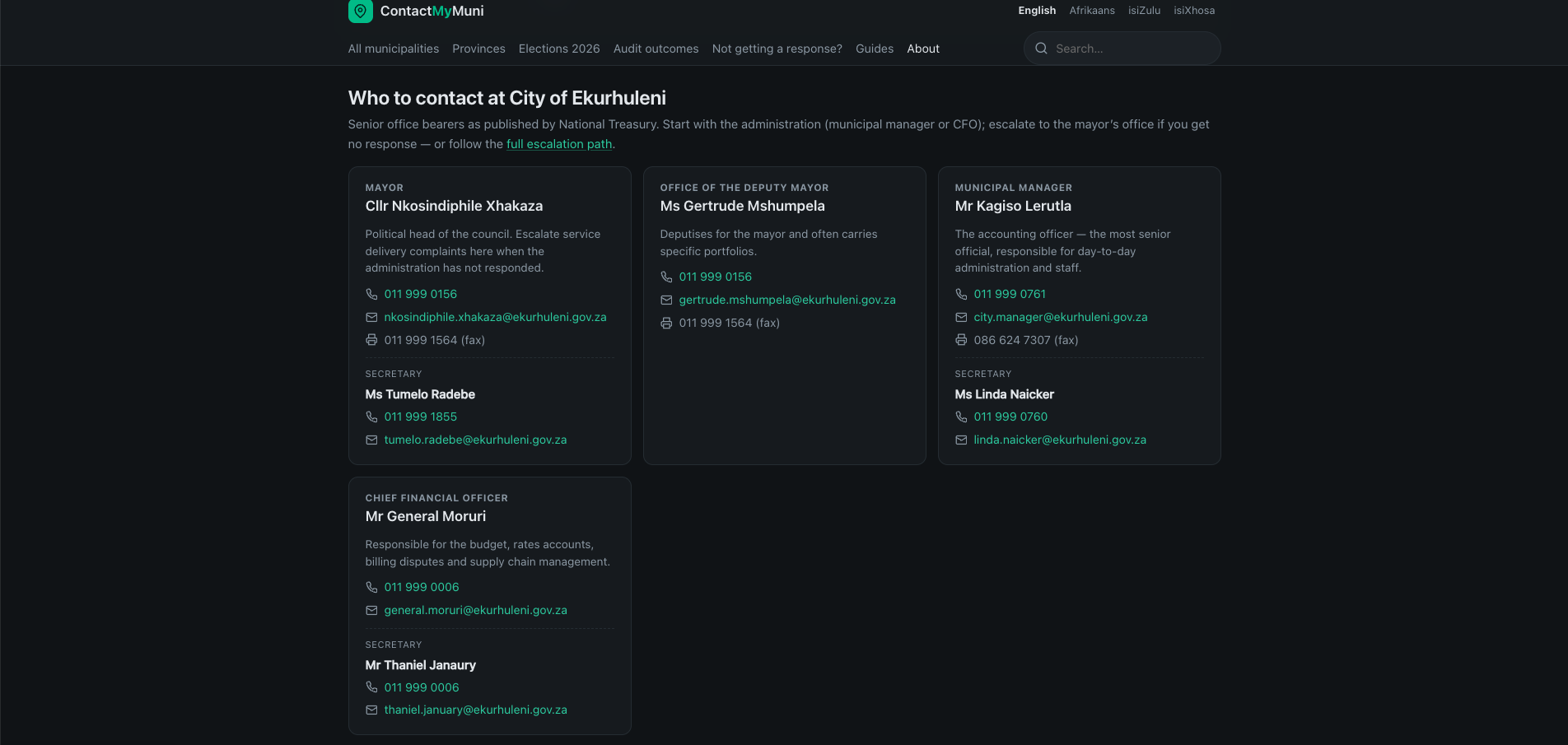
In South Africa, public bodies such as government departments, legislatures, and municipalities are legally obligated to publicise their contact details in the interest of encouraging an open line of communication between local government and their constituents. Created by OpenUp developer Michael Glenister, ContactMyMuni makes it easy to find the contacts of your current local representatives, including a guide indicating what each representative manages.
To contact your ward councillor, you can check your municipality’s Find Your Councillor page, for example, on the City of Cape Town’s website. This can be particularly useful if they are running for re-election. Some examples of potentially relevant questions include:
- “What were the biggest infrastructure projects completed in our ward over the last five years, and did they finish on time and within budget?”
- “Can you provide a copy of your attendance record for council and committee meetings over the past term?”
- “What mechanism will you use to gather community input before you vote on major municipal decisions?”
Mythbusters
Across the world, election periods have become a flashpoint for online mis- and disinformation, the prevalence of which has been exacerbated by the proliferation of generative artificial intelligence (AI) tools. The Electoral Code of Conduct on Countering Disinformation lists false claims about voting dates, manipulated or synthetic media, fake accounts and bot networks as examples of disinformation, all of which threaten the integrity of the information ecosystem during elections.
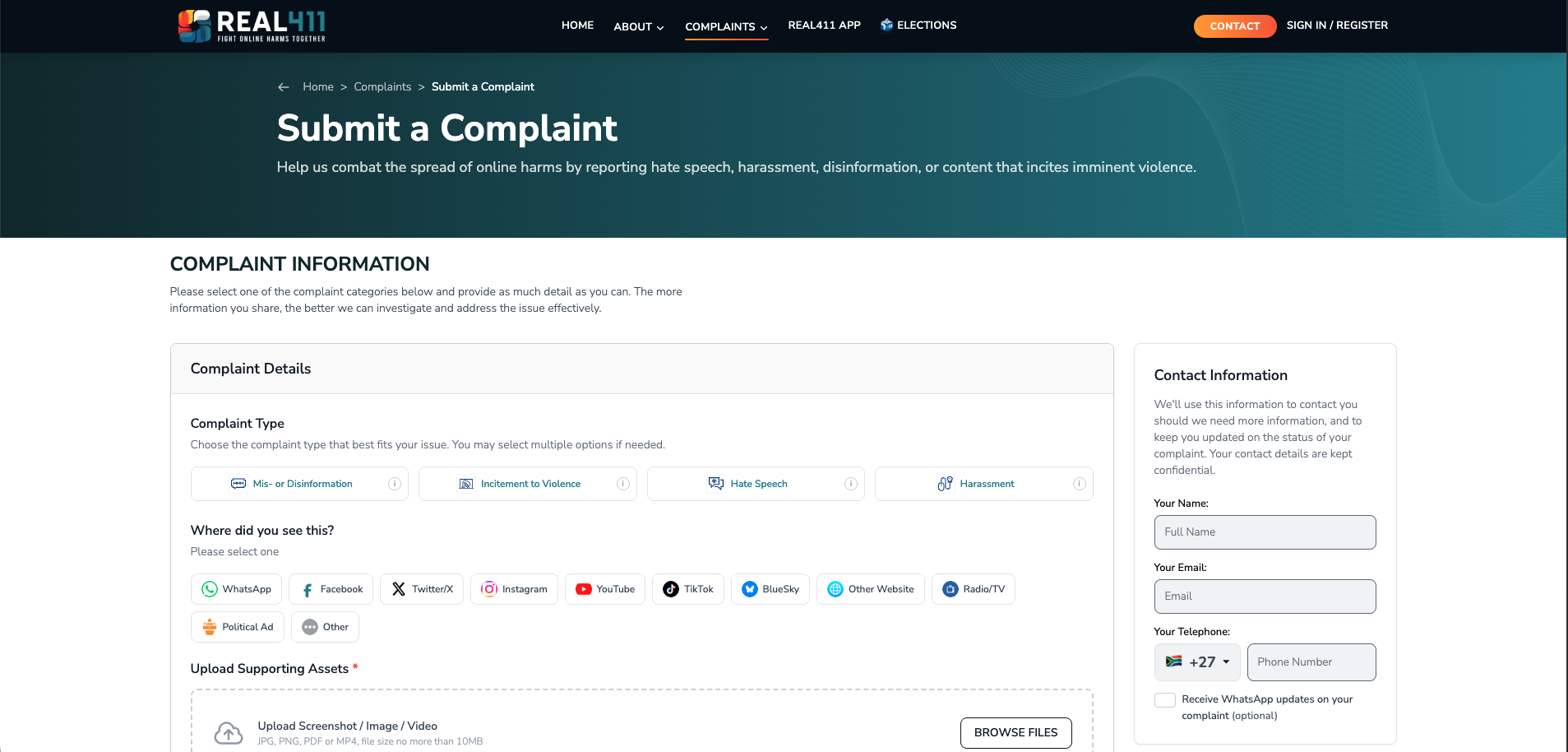
Some steps you can take to verify a particular post or claim include checking the source, reverse image searching and using free online tools such as Real411 and PAdRe Ad Compare. Real411, run by Moxii Africa, works directly with the IEC and allows you to submit complaints regarding false information, incitement to violence, hate speech or harassment, which are reviewed by volunteers and experts. The website also publishes previous complaints, which lets you check whether something you might be unsure of has already been reviewed.
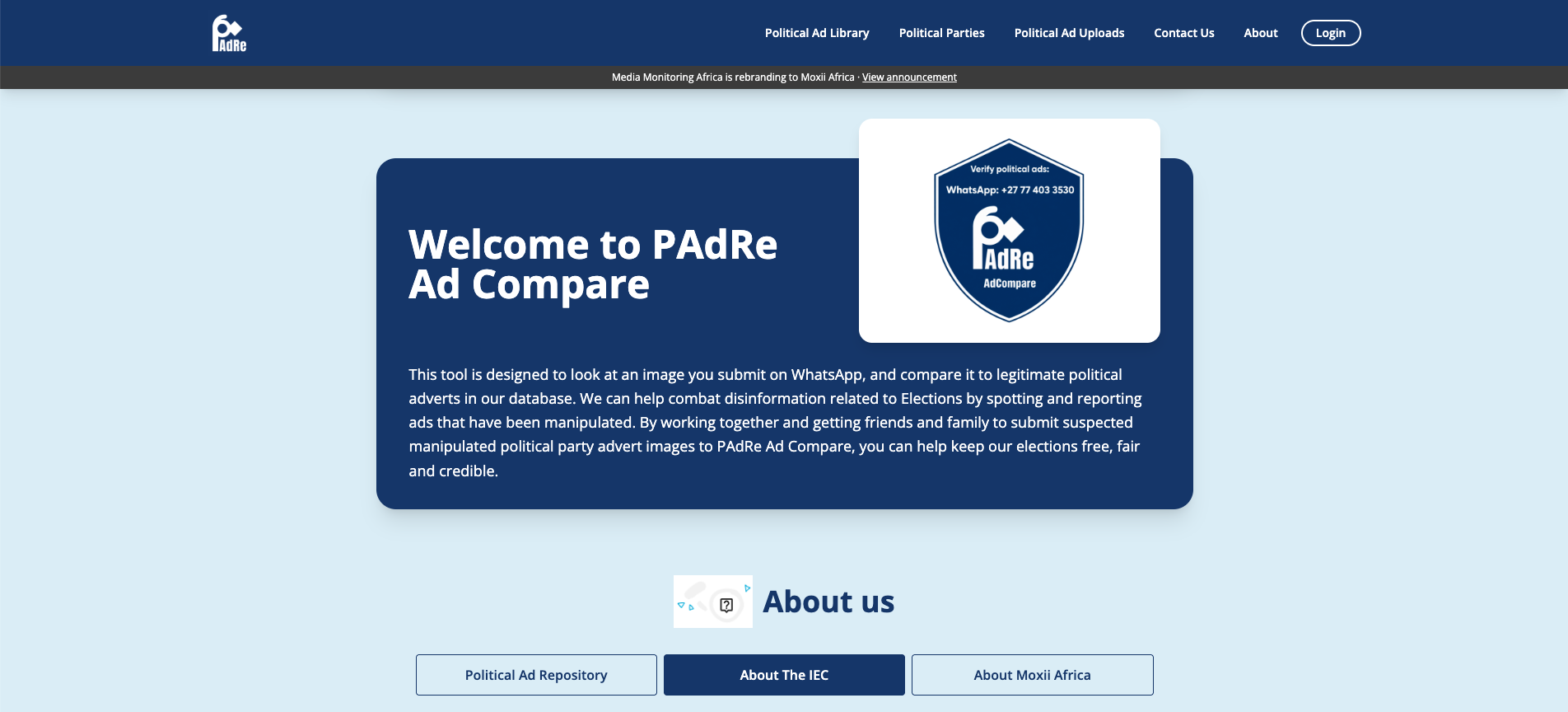
Additionally, PAdRe Ad Compare, another project by Moxii Africa, was designed specifically to check the legitimacy of political advertisements. The site hosts a repository of genuine political ads, allowing you to cross-reference potential fakes. It also provides a WhatsApp line through which you can submit ads to be verified, helping you to debunk ads containing false claims, slogans or fake candidates.
Voting is an integral part of civic participation and one of the most direct ways in which you can play a role in shaping the structures that govern your life. But fulfilling your civic duty on 4 November does not have to mean spending hours combing through reports, manifestos and government data. No matter if you’re a first-time voter or a seasoned one, we hope the tools listed above can assist you in making an informed choice, whether you want to check your ward, look into coalitions, follow municipal spending or check something you saw online. Once voting day is over, many of these resources can also help you hold your new council to the promises made during this election.