


In early June, the Global Data Festival and Kenya Space Conference (GDF-KSEC) was hosted in Nairobi. Seizing the opportunity, OpenUp and our partners from the Global Partnership for Sustainable Development Data hosted a session as a continuation of our work on the Capacity Accelerator Network to bring together Kenyas, Nigerias, Ugandas and Ghanaian members in a 4 June workshop. It was a special session for us - after the last few years of working with hundreds of African experts and policymakers on building their advanced health and climate data skills, this session marked our move to a next stage of more considered support that helps to turn this data knowledge into better, actionable policy for advancing health and climate progress.
We’ll unpack here what we discussed.
Who cares about policy?
In the context in which we were discussing it, policy is the instrument for - through political consensus - driving public sector action. It determines the steps a group of actors (here government officials) will take to meet health and climate goals.
If you think about policy at an organisational level - like a human resources policy - consensus is really important, because much of its mandate and ability to determine action derives from people’s own investment in it (though there are ways to also, say, link it to your performance, which can act as a reinforcing incentive). And what this consensus helps to highlight is that it matters both how we make policy, and what the substance of that policy is.
When policy goes wrong
Trying to make policy, especially as you scale up to nations, is complex - and that complexity only grows in fields like health and climate that present such urgent, but interdependent, problems for solving. This is a context where health problems and climate problems are also connected: quantitative analysis has directly demonstrated how increased temperatures will directly contribute to increases in mortality and the existence of disease in South Africa. We need adequate data, and the experts that can turn that data into meaningful information, to help us drive evidence-based policy as the foundation for our actions. In other words, our policy shouldn’t just be driven by politics, but fact (and good theory).
But we have an acknowledged crisis of data lacuna across the region. This issue of insufficient data and evidence then contributes to the “square peg, round hole” problem frequently seen in regional policymaking. Insufficient detail about context means that policy that is “parachuted” in by development actors does not adequately deal with the local context. I would suggest most especially, frequently underestimating the local social and political dynamics of importance.
How can we do it better?
Simply - where urgent, shared action is necessary, it needs a mechanism to guide it - and policy is one of these mechanisms. Good policy will arise from some specific conditions - good evidence, clear problems and shared goals, context specificity, and enforceability and/or incentives that support its goals. But this is only truly possible where the design of the policy itself has been collaborative, with a variety of relevant stakeholders aiding construction - and through processes that themselves are well designed. Where the process is collaborative, it also assists with the implementation - you are embedding through the process the political will that will be required to realise it.
Improving the data dimensions
These ambitions can be assisted by unpacking the ways data can be leveraged for the common good. In our training, we highlighted OpenUp’s simple summary for building a data narrative:
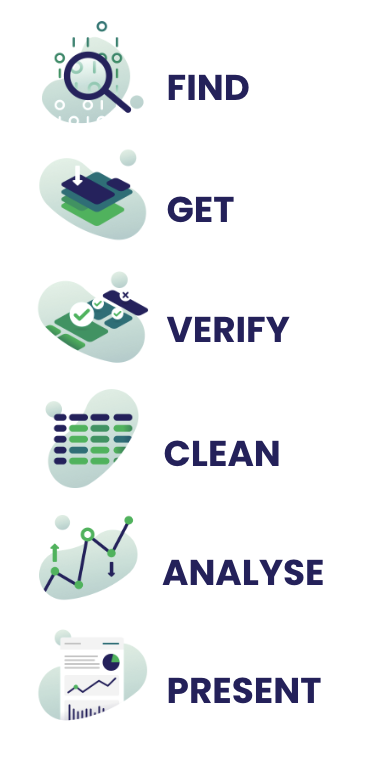
Figure 1: OpenUp’s Data Pipeline for Narrative Storytelling
When policymakers and relevant stakeholders are trying to participate in the policymaking process, it really is an activity of influence. You are trying - through data and evidence - to both predict the outcomes of a policy, and therefore influence what that policy describes as the shared action. We already know that the data context is challenging on multiple levels, but there are still simple steps to building up the policy case as best as you can.
1) Find data where you can
OpenUp is fundamentally an open-first organisation, and we are part of open communities globally who are working to advance good open data for advancing political, social and economic good. There is a growing community of open data that is available and this is an opportunity for new learnings, and then new strategies, that can be built into our policies. By no means exhaustive, you find relevant open data on health and climate of relevance to South Africa for some of our portals like:
In our training, we like to help our participants build up their access to the broad array of tools and data sources that do exist, and are often simply difficult to source, or engage without background.
2) Visualise for narrative
Data can be a fundamental instrument for communicating well. It is verifiable, and offers a way to cross language barriers because it can be communicated visually as well as narratively. It has been demonstrated, in fact, that people have a higher recall rate when data is visualised - which is important too for what is increasingly acknowledged as visual-first cultures.
3) Listen well
This is a bit of a different step from our usual narrative step-by-step, but is really important when we think about all the preceding advice we have outlined on policy processes. Through listening carefully to all the stakeholders in a policy process we can both better understand how to align our own asks with the asks of others (a vital step in negotiating), and also learn more, creating a more robust base for our own knowledge!
This also better enables you to shape your narrative to your intended audience, which includes a policy community - building on our general advice for using user-centred design as a powerful instrument for designing narrative and solutions.
Workshops like this one are a reminder that the most powerful policy ingredient is often the hardest to manufacture: trust built across borders, disciplines, and roles. That is what we are really in the business of growing.
This blog was prepared by OpenUp as part of our continuing support for the Capacity Accelerator Network in partnership with the Global Partnership for Sustainable Development Data.


.svg)


